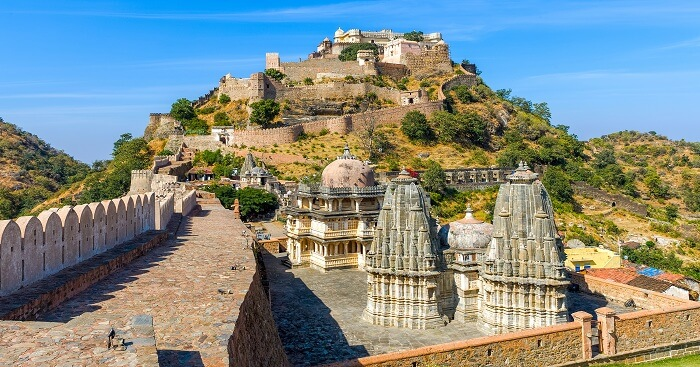
Kumbhalgarh is in the Aravalli hills of Rajasthan. It is one of the excellent examples of culture, history, and natural beauty. It is popular for its huge fort with the world’s second-longest wall. It is the UNESCO World Heritage Site that has many tourist attractions, including a wildlife sanctuary, several temples, Bada Mahal, Haldi ghati, and more. The following guide helps you experience the timeless charm of this place and discover why it is popular as one of the most captivating travel spots of Rajasthan.
Top Places to Visit in Kumbhalgarh
1) Kumbhalgarh Wildlife Sanctuary
In the Aravalli range, Kumbhalgarh Wildlife Sanctuary is a must-visit for nature lovers. It has many rare species like the grey jungle fowl and white-breasted kingfisher. Also, it has animals, namely sambhar, nilgai, leopards, and wolves. Moreover, this sanctuary is unique for its successful wolf breeding program.
Birdwatchers will enjoy seeing over 200 species, including doves and parakeets. Generally, the monsoon is the best time to visit because the lush greenery makes the horseback tours and safaris more thrilling. Trekking, jeep safaris, and horseback rides allow you discover the wilderness while enjoying the beautiful backdrop of the Aravallis.
2) Badal Mahal
Mounted at the highest point of Kumbhalgarh Fort, Badal Mahal is a two-story palace constructed by Rana Fateh Singh in the 19th century. It is categorized into Mardana Mahal for men and Zenana Mahal for women. The interiors are decorated with dynamic murals, intricate stonework, and airy designs to ensure enough ventilation. Queens once viewed court proceedings through the stone jalis here. With its colorful paintings and impressive architecture, Badal Mahal is one of the most beautiful spots in Kumbhalgarh.
3) Nathdwara
Nathdwara is a holy town near Kumbhalgarh, popular for the Shrinathji Temple dedicated to Lord Krishna. Thousands of devotees come here daily to offer prayers. This town has many other attractions like the Charbhuja Temple (known for exquisite mirror work), the craft village of Molela (known for terracotta pottery), and the ancient Eklingji Temple (which shows remarkable architecture). This place combines art, culture, and spirituality to make it a rewarding stop for both pilgrims and tourists.
4) Haldighati
Haldighati is a momentous mountain pass in the Aravalli range, nearly 40 km from Kumbhalgarh. It reminds us of the famous 1576 battle fought between Maharana Pratap and the Mughals. The yellow soil resembles turmeric, which gave the place its name. You can explore the battleground, observe wonderful views of the Aravallis, and visit the Maharana Pratap Memorial to explore more about his bravery. If you are a history enthusiast, Haldighati is one of the most legendary places to visit near Kumbhalgarh.
5) Ranakpur
Ranakpur is a calm village in the Aravalli valleys, renowned for its spectacular Jain temples. The calm atmosphere and intricate architecture make it a spiritual and cultural gem. The temples, resembling Khajuraho’s style, are famous for their detailed carvings. The main idol of Lord Adinath has four faces, symbolizing the Tirthankaras’ search in all directions.
A unique feature is the pillars that change color with the sunlight, shifting from pale to golden by evening. Ranakpur’s beauty and tranquility attract visitors from around the world, making it a must-visit near Kumbhalgarh.
6) Mammadev Temple
Mammadev Temple was constructed in 1460. It lies below Kumbhalgarh Fort and is popular for its intricate carvings and beautiful interiors. It contains cenotaphs in memory of Prithviraj Chauhan and Rana Kumbha, making it historically significant. Four large stone blocks here carry inscriptions about the heritage of the Mewar clan. The temple also has a large reservoir or “kund,” adding to its charm. Its architecture and sculptures make it one of the most remarkable sites in Kumbhalgarh.
7) Neelkanth Mahadev Temple
Inside Kumbhalgarh Fort, Neelkanth Mahadev Temple is a calm shrine dedicated to Lord Shiva. The highlight is a six-foot-high shivling made from a single Kasoti black stone. The temple features an open-pillared mandapam, sanctum, and inscriptions on its pillars. Visitors often feel a sense of tranquility and timelessness here. It is one of the most beautiful temples in the fort; it presents a mix of spiritual peace and architectural splendor.
8) Ganga Govrdhan Museum
Located on Kumbhalgarh Fort Road, Ganga Govrdhan Museum is a treasure of Rajasthan’s history and culture. It displays ancient sculptures, paintings, weapons, and artifacts that reflect the traditions and dynasties of the region. The museum’s peaceful atmosphere and informative exhibits make it a great place to learn about the artistic and cultural evolution of Mewar.
9) Vedi Temple
Situated within Kumbhalgarh Fort at Hanuman Pol, Vedi Temple is dedicated to Goddess Vedi. It was built by Rana Kumbha. It showcases a unique octagonal shape and stands on 36 pillars to honor the sacrifices of pilgrims. Later renovated by Maharana Fateh Singh, it remains one of the important sacrificial sites in India. Its architecture and historical significance make it a must-see.
10) Parshuram Temple
Parshuram Temple is a cave shrine in the Aravalli Hills. It is believed to have been carved by the god Parshuram himself using his axe. Reaching the temple requires climbing 500 steps, but the effort is rewarded with natural figures of Lord Shiva and Ganesh inside. Nearby are nine kunds that never dry up. Every year, fairs are held here during Saptami and Shravan Shukla Shashti. They enhance the cultural importance of this temple.
11) Muchhal Mahavir Temple
Located on Ghanerao Road, Muchhal Mahavir Temple is a Jain shrine dedicated to Lord Mahavir. The entrance is striking, with two large elephant statues guarding the temple. Inside, the white idol of Lord Mahavir sits in the Padmasana posture. A unique feature is a statue of Lord Shiva with a mustache, which makes this temple one of the most visited in Kumbhalgarh.
12) Kumbhalgarh Goshala
Kumbhalgarh Goshala is a peaceful shelter dedicated to the care of cows; it is admired in Indian culture. It provides food, medical care, and protection to these sacred animals. Visitors can witness the compassion and devotion of caretakers here, making it a meaningful stop that reflects the values of kindness and tradition.
13) Kheda Devi Temple
Also known as Mataji Temple, Kheda Devi Temple is located in the Aravalli Hills near Neelkanth Mahadev Temple. Surrounded by greenery, it presents a peaceful and spiritual atmosphere. The temple’s carvings and architecture reflect Rajasthan’s heritage. Climbing its stone steps feels like a journey of reverence, making it both a place of worship and a serene retreat along trekking trails.
14) Ram Pol
Ram Pol is the main gate of Kumbhalgarh Fort, built in the 15th century by Rana Kumbha. It is historically important as the entrance where Maharana Pratap greeted his guests. The fort itself is a UNESCO World Heritage Site, famous for its massive wall stretching 36 km, the second-longest in the world after the Great Wall of China. Ram Pol shows the fort’s strength and magnificence.
15) Kumbha Palace
Also called Rana Kumbha Palace, Kumbha Palace is a historic site within Kumbhalgarh. It still shows the majesty of Rajput martial architecture. Visitors can explore remains of chambers, temples, and reservoirs, which tell stories of the Mewar kingdom’s past. The palace also offers panoramic views of the Aravalli Range.
Top Things to Do in Kumbhalgarh
- Explore Kumbhalgarh Fort: You can walk along the second-longest wall in the world. There, you can visit majestic gates, ancient temples, and see panoramic views.
- Visit Badal Mahal: You can observe colorful murals and stunning views from the Palace of Clouds.
- Attend the Sound & Light Show: This show depicts how the fort’s history comes alive through evening visuals and narration.
- Hike in Kumbhalgarh Wildlife Sanctuary: In this sanctuary, you can spot deer, leopards, wolves, antelopes, and exotic birds while enjoying jungle trails or taking a jeep safari.
- Trek Beautiful Trails: Discover forested paths and valleys around the fort for stunning landscapes.
- Ranakpur Jain Temple: Watch the wonderful marble architecture and intricate stone carvings.
- Discover other temples: You can discover temples like Parshuram Mahadev Temple (dedicated to Lord Shiva), Neelkanth Mahadeo Temple (has a six‑foot Shiva lingam), Muchhal Mahavir Temple (unique portrayal of Lord Mahavir with a moustache), and other hidden temples (Jain and Hindu temples).
- Kumbhalgarh Festival: Enjoy music, traditional dance, and outstanding light displays.
- Sunset Views and Photography: Capture impressive shots of the fort and Aravalli ranges at sunset.
- Shop Local Handicrafts: You can purchase jewelry, marble items, and traditional fabrics from Rajasthani artisans.
Conclusion
Kumbhalgarh is not only a legendary fort but a destination that combines spirituality, history, and nature. From ancient temples to dynamic wildlife sanctuaries, each attraction provides unique glimpses into Rajasthan’s rich heritage. While you explore these places, you get a unique experience of culture, adventure, or peace. If you are in the city or planning to visit it, then you can add any of these places to your list and enjoy the most thrilling experience.